
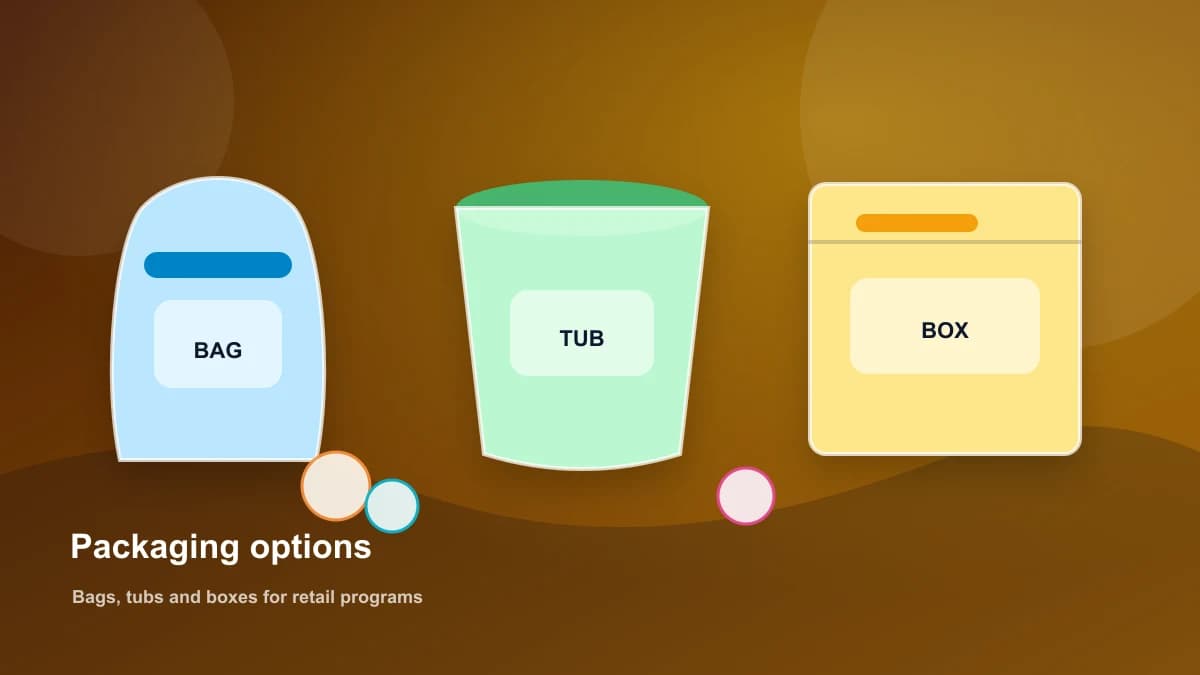
Packaging is often the part of a private-label laundry pod project that turns a good formula into a sellable product. It affects shelf impact, shipping efficiency, moisture protection, customer perception, and the final cost structure. Choosing the right format early helps the whole OEM program move with fewer revisions.
Flexible bags are common for online launches, distributor programs, and value-focused retail lines. They are usually lighter than rigid packaging and can support a wide range of pack counts. Buyers should pay attention to seal quality, material structure, print method, and how the bag stands or displays on shelf. A bag that saves cost but feels weak in the hand may not support the brand position.
Tubs are often used when buyers want stronger shelf presence, easier storage after opening, or a more family-size product format. They can feel more premium and practical, but they also add cost, occupy more shipping space, and require careful matching between pod count and container size. If a tub looks half-empty after filling, the customer experience suffers even if the product itself is correct.
Boxes can work well for structured retail programs, especially when the buyer needs strong front-facing artwork and a clean shelf block. They are useful for communicating claims, fragrance, count, and usage instructions clearly. The tradeoff is that inner protection still matters. Pods must be protected from moisture and movement inside the pack, so the complete structure should be reviewed rather than only the outer artwork.
Carton planning should not be left until the end. Outer carton size, gross weight, pallet pattern, and container loading efficiency all influence landed cost. A packaging route that looks attractive at unit level may become less competitive if it wastes carton space or creates handling issues. For distributors, carton labeling and warehouse readability can be just as important as the retail pack.
Artwork readiness is another key factor. If the buyer already has compliant artwork, the project can move faster. If artwork is still being developed, the factory should know which information is confirmed and which label details still need review. Claims, usage instructions, warnings, barcode placement, pack count, and market language should be aligned before production booking.
The best packaging choice depends on the launch plan. A market test may prioritize low setup complexity and flexible quantities. A retail launch may prioritize shelf impact, carton efficiency, and repeat-order stability. A distributor program may need a balance between cost, durability, and clear market positioning. When the packaging route matches the commercial plan, the factory can quote more accurately and production can move with fewer surprises.