
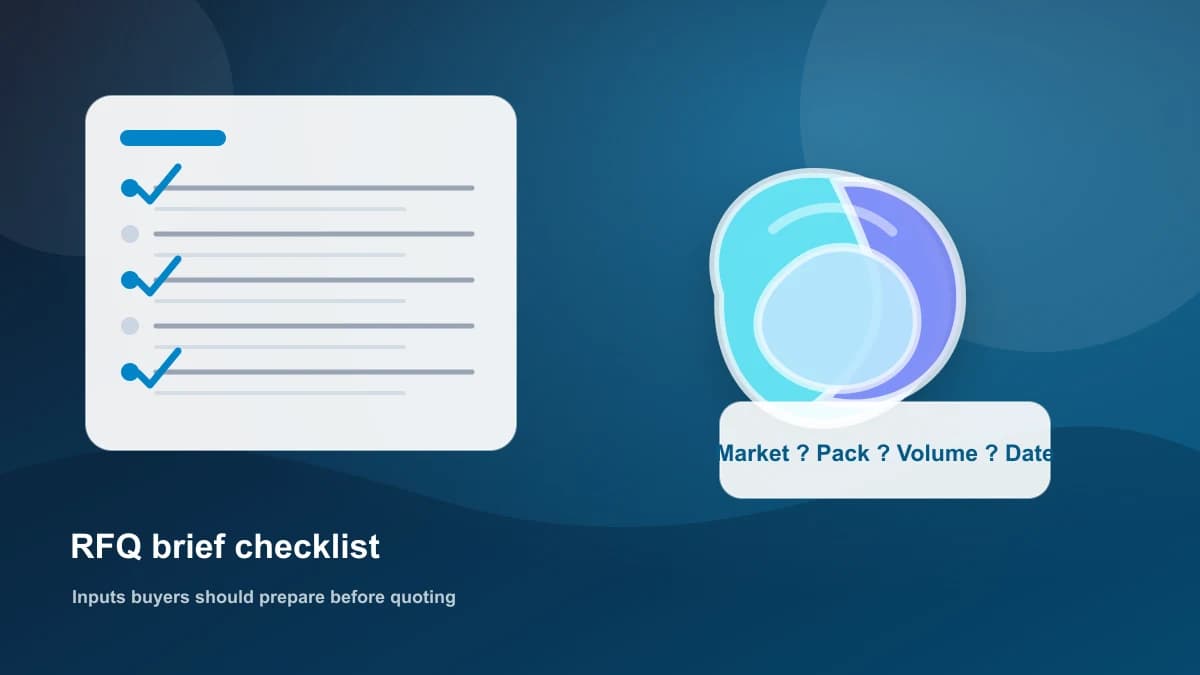
A useful laundry pods quotation starts before the first email is sent. When a buyer shares only a target price, the factory has to make too many assumptions about formula strength, chamber structure, packaging, compliance needs, and shipment terms. The result is usually a vague price range that is difficult to compare with other offers.
A stronger RFQ begins with the target market. Laundry pod formulas, label language, documentation, fragrance preferences, and claims can vary by country or sales channel. A distributor selling through supermarkets may need a different pack count and carton setup from an online brand testing a first private-label SKU. Sharing the destination market and sales channel helps the factory judge whether the product direction is realistic.
The second input is product positioning. Buyers do not need to send a complete formula, but they should describe the intended pod type, chamber format, fragrance direction, wash performance, and any priority claims such as color care, low-temperature wash, antibacterial positioning, or sensitive-skin positioning. If there is a benchmark product, include its pack size, unit weight, and market price so the factory can understand the commercial target.
Packaging details are just as important as formula details. A laundry pod quote can change significantly depending on whether the program uses a bag, tub, box, carton display, or multi-pack configuration. Share the expected count per pack, outer carton needs, labeling route, and whether the artwork is ready. If artwork is not ready, say so early. Packaging readiness often affects lead time more than buyers expect.
Volume should be described as a planning range, not just a single number. A first order, repeat order, and annual forecast tell the factory how to think about MOQ, raw material planning, packaging purchasing, and production scheduling. If the project is a market test, say it clearly. If it is a retail launch with fixed delivery windows, that should be clear as well.
The best RFQs also include shipping expectations. Incoterms, destination port, preferred shipment method, and document requirements all influence the final landed cost. Without that information, two quotations may look similar at product level but behave very differently once freight and documentation are included.
A concise RFQ does not need to be long. It should answer five questions: where the product will be sold, what kind of pod is needed, how it should be packed, what volume is expected, and when the buyer needs samples or bulk shipment. With those points in place, an OEM factory can respond with a practical product route instead of a generic price list.